


Broadcasting a live event may seem simple… until the day of the event arrives.
Technology has advanced tremendously, and today there are tools capable of streaming high-quality video at scale and with low latency. However, many teams still experience live broadcasts as moments of stress, improvisation, and risk.
Why does this happen? In most cases, it’s not because the technology fails, but because a live broadcast is a complex operation where people, processes, and decisions must work together in real time.
When a Live Event Stops Being “Just Press Play”
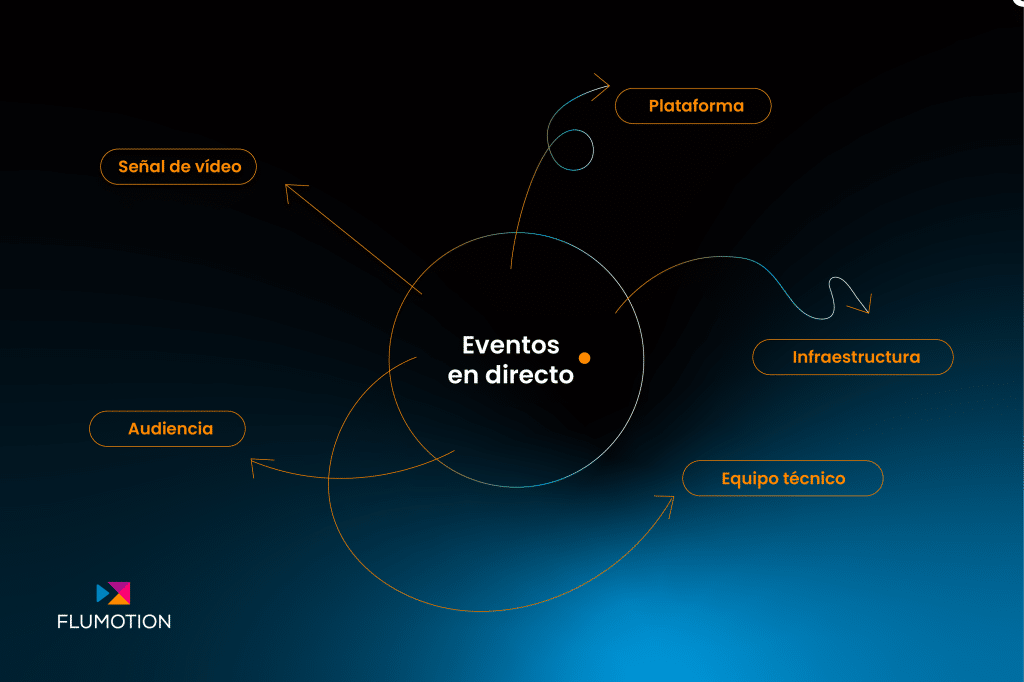
A live event is not a single system, but the combination of many:
- Input signal
- Streaming platform
- Infrastructure
- Human teams
- An audience connected from multiple devices
When everything works, it feels like magic.
When something goes wrong, it’s usually because the system wasn’t being viewed as a whole.
What Typically Becomes Complicated in a Live Broadcast
- Too Many Moving Parts, Not Enough Overall Visibility
In many streaming projects, the following coexist:
- Different providers
- Tools that are not connected to each other
- Internal and external teams
- Decisions distributed across too many stakeholders
The problem is not having many moving parts, but that no one has a clear view of how they all fit together in real time.
When something fails, it becomes difficult to quickly identify where the problem originates… and a live broadcast doesn’t wait.
- Poorly Defined Roles Under Pressure
Before the event, everything seems clear. During the event, it’s not always that way.
- Who makes decisions if something goes wrong?
- Who communicates with the client or the audience?
- Who has the final technical authority?
- In a live broadcast, every second counts, and the lack of clearly defined roles often creates uncertainty precisely when clarity is needed most.
- Insufficient Testing (or Too Much Optimism)
One of the most common mistakes is assuming that:
“If it worked once, it will work again.”
But live broadcasts change:
- Larger audiences
- New devices
- New locations
- Last-minute changes
Without realistic testing and without simulating stress scenarios, problems tend to appear exactly when there is the least room to respond.
- Scalability Misunderstood
A small live broadcast and one with audience spikes are not the same challenge, even if the content is identical. What works for 100 viewers can collapse with 5,000 or 10,000 simultaneous connections if it hasn’t been properly planned. And the most critical part: failures usually appear when the event has the greatest visibility.
- The Absence of Backup Plans
In many live broadcasts, there is no clear answer to questions such as:
- What happens if a signal drops?
- Is there redundancy?
- Is there a plan B or C? Not having alternatives doesn’t mean the event will fail… but it significantly increases the risk when something unexpected happens.
The Real Problem Is Usually Not the Technology
After analyzing hundreds of live broadcasts, the same pattern keeps repeating:
The problem is usually not the technology itself, but how the entire system around the live broadcast is orchestrated.
A professional live broadcast does not depend on just one tool, but on a well-designed operation where technology, people, and processes work in coordination.
Looking at Live Broadcasting from a Different Perspective
Before thinking about which platform to use, it’s worth asking a more fundamental question:
Are we prepared to operate a live broadcast professionally?
Understanding this is the first step toward reducing risks, stress, and surprises… and this is exactly where many projects begin to evolve.
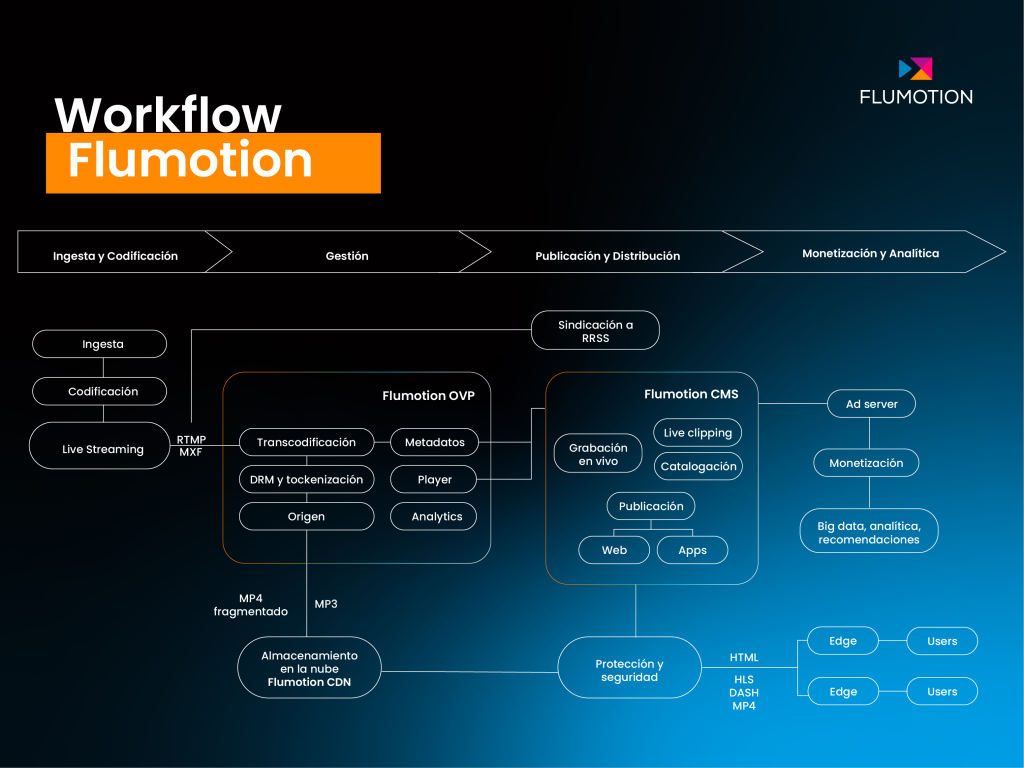
Broadcasting a live event professionally is not just about choosing a tool, but about designing an operation where all the pieces work together.
At Flumotion, we have spent years helping teams orchestrate the entire streaming workflow, from ingest to distribution and analytics. →
analítica.→ www.flumotion.com
By Miguel Chirivella
COO Flumotion